History of the Record Industry, 1877-1920’s
https://medium.com/@Vinylmint/history-of-the-record-industry-1877-1920s-48deacb4c4c3

Course Readings: Introduction to the Music Industry | Fall 2018
Dr. Stan Renard
History of the Record Industry, 1877-1920’s
https://medium.com/@Vinylmint/history-of-the-record-industry-1877-1920s-48deacb4c4c3
Comments are closed.
There’s no doubt that it took pure genius, creativity, and hard work for individuals in the 1800-1900’s to practice their art of, well, artistry. It seems as though now, it does not take much talent, nor hard work, to reach an audience with works of music. Not only can anyone record music now on nearly any device, but there is a much more broad way to find music, as opposed to needing a record player; the internet! In a world where every idea is only recreated and shifted, most music, in my opinion, has reached a point of generic sounds and effort. With our current, and growing, technology, the record industry’s future appears weak and on the decline, possibly on the edge of extinction.
The following link discusses how our technological advancements could be a downfall for the oldies, and a savior for the new schoolers:
https://www.forbes.com/sites/ianmorris/2014/11/17/technology-is-destroying-the-music-industry-which-is-great-for-the-next-taylor-swift/#417dd411236b
Hi Gabriel! I read your article and was interested in the fact that record labels are suffering due to a rise in streaming, however I don’t think that it would be the worst thing that could happen. I’m curious; do you think it is necessarily a bad thing for these record labels to become obsolete? I won’t argue that much of the music on the radio sounds generic, however I do believe that streaming services make it much easier for people to find music that isn’t like what you hear on the radio. It allows you to dig deeper and find unique songs that you may not necessarily have heard otherwise without relying on the middleman.
Here is a link to an article that talks about the “rebound” of the music industry, and the part that streaming has played in it. Although it is a little dated, I’m curious to hear everyone’s thoughts on it.
https://www.theatlantic.com/entertainment/archive/2017/04/the-music-industrys-rebound-is-significant-but-fragile/521670/
And yet we see the resurgence of popularity for the vinyl, the complete tank of the CD, and utter dominance of digital streaming. What’s next? That’s the most exciting thing to look forward to. I personally believe VR is the next great frontier for music. Being able to “virtually” attend a sold out concert or venue showcasing your favorite artist without having to actually be there in person. Pay a fee to watch, download old concerts, maybe get advertising in there if you’re on the business end, tons of possibilities. Microsoft has this VR software called Holoportation that, “allows high-quality 3D models of people to be reconstructed, compressed and transmitted anywhere in the world in real time.” Just an example of where I can see the music industry heading!
https://www.microsoft.com/en-us/research/project/holoportation-3/
The way music has been sold has changed drastically. It went from live performances, to ticks on a music box, to a CD, and now to Social media outlets such as Apple Music and Spotify. In my opinion, selling CD’s is the most important factor in how well a musician will be successful. CD’s were once things of the past because now we can stream music on our phones for free or pay a minimum cost of $4.99 for unlimited music a month. Easier access, and less money to spend has caused generations to leave CDs behind, but now they have made a huge comeback. Most artists now make their most money off of merchandise which includes, shirts, CDs, phone cases, etc. Because physical copies of music are so easy to make and are cheap to burn, they have become super accessible to the public and are now selling again. It is important to keep selling items like CDs and Vinlys because that’s a fast way to for a new or old artist to get started and make money. Here is a link on why CDs are super important: https://www.fastcompany.com/40532455/the-cd-business-isnt-dying-its-just-evolving
Today, the music-making experience has been commodified and vulgarized. Due to the accessibility of user-friendly Digital Audio Workstations, or “DAWs”, such as Garageband and Pro Tools, amateur and professional music may be produced at competing rates. While this essentially “levels the playing field” for people to learn how to create and produce music, success is not guaranteed. While there are certainly fewer musically-gifted people than there are computer owners, it seems that the increased ease and access of these “DAWs” has created a more competitive market for musicians. Because everyone is competing to be heard, these “artists” are sacrificing originality for guaranteed mass appeal. This leads to the definition of “success” being cheapened, and in time it will be hard to distinguish the level of quality of music, whether it be the product of a true artist or a product of sensationalism.
Here’s a link that talks more about today’s strife of living as a successful musician:
https://blog.freelancersunion.org/2014/03/19/it-harder-make-living-musician-today/
Exactly Thomas! Music recording and technology has advanced so far beyond what Edison and Bell and other inventors alike even imagined or thought capable. With the introduction of the Midi system, which is just the electronic version of the “musical information on a surface” and a decoder for the information, as the article mentioned for jukeboxes and such, the reproduction of sound is not only immaculate but arguably more unique, and more accurately than even traditional musicians
https://www.youtube.com/watch?v=lOvkuPzXmnI
here’s a link that shows the introduction to MIDI and DAW on BBC radio show. It is the beginning of the horizon that led us to the programs and tech we use today.
(roughly 15 min to 19:30ish )
It is true that the music industry is evolving to be less about the music being put out and more about the image and selling point of the artist. Though there are still many talented musicians making it in the industry, a new phenomenon has arisen in which record labels are signing social media stars. These are people who have no musical background whatsoever. To add to the statement that the music-making experience has broadened to a point where practically anyone can do it, music has become just another way for people with large social media followings to make money. This works because people who have a following do not necessarily need to create “good” music in order to receive a mass response. Record labels are looking past talent and straight through to what is marketable today. This could hurt these labels in the future, because like many before, social media stars do not seem to stick around. They typically get their fifteen minutes of fame and pass over for the next trending star. So does talent matter anymore? I believe it does. Talented musicians are going to be the ones that stick around beyond the fads of today.
Here is an article that goes into more detail on this topic: https://www.rollingstone.com/music/music-features/you-dont-need-to-be-a-musician-to-get-a-record-deal-in-2018-702710/
There is no doubting that we would not have the technology we have today without the Friar Roger Bacons and Alexander Graham Bells of the past. There inventions are the reason we have so many of the great tools that we have today. But when I was reading this article i was drawn to the portion about the Jazz contribution to the Evolution of the Sound Recording Industry. A lot of folks do not recognize the backing of white musicians by black musicians during this time due to the discriminatory climate in the United States at the time. It is known that folks did not back Jazz music until an all White band came along. The Original Dixieland Jass Band was that band. Eventually they became a huge part of inviting musicians of any color to have the opportunity to put out records. I believe that showed how music can bridge any gap. The attached video is the first song recorded by ODJB in 1917 called “Dixie Jass Band One Step”
https://www.youtube.com/watch?v=UljhWqC50QU
Interesting comment Thomas.
I too was concerned with the effect that new technologies have had on the creation, production, and performance of music, especially when viewed as an art form. However, since I have returned to school to study music as an industry, I have come to the realization that in order to be viable in my chosen field or craft, I must be willing to accept the paradigm shifts and utilize the new technologies to my advantage. I feel that when used properly, an older guy such as myself can enter into the music business and leave my mark without having to live 40 more years in order to form a band and establish a solid career.
I hope you will be pleased to know that I have found one saving grace to this issue. Although technology coupled with business knowledge has enabled many to be able to create and market music with some financial success, a true artists will have to be able to perform that music live at some point. And that is what distinguishes the art from the business.
I viewed the link you provided with a positive perspective. Here is another.
https://tech.co/music-production-evolution-2016-01
It is seemingly obvious to think about how the advent of current music technology has revolutionized the way we consume media today, however, most people neglect to think about just where we as a society would be if these advancements had not been made. Music has not only made significant impacts on the online world, but also many real and physical paths have been created thanks to music. Numerous cities and thousands of jobs have been created thanks to the music industry, (think cities like Nashville, or Los Angeles, even Austin). In some instances, these cities would have been hubs just because of their favorable location, but it is important to realize that the consumption of music has numerous physical effects on locations. For example, the glamorization of Nashville in music and music production has made significant effects on the city’s growth in the modern media age. More and more people are flocking to the city to follow their passions, to record and sell thier sounds. This would not have been at all possible without the inventions of Bell and Edison who pioneered the expansion of the music technology scene.
Upon looking at these advancements, it is almost dreary to think about just what the world would look like if we still had to consume music in a physical way.
For more information on the effects of the music industry and urbanization of Nashville click here: https://www.nashville.gov/Portals/0/SiteContent/MayorsOffice/EcDev/docs/NashvilleMusicIndustryStudyExecutiveSummary.pdf
For the music industry, changes in the digital age affect it both, negatively and positively. In the hundreds of years that music has existed, we have changed music format mediums, drastically.
In the 1920’s, the radio emerged and there was a nosedive in revenue and royalties, due to “free listening”. To successfully recover from the loss of revenue, the music industry worked to improve their sound fidelity in recorded discs and the RCA introduced the 45s in 1949. Although, they opened a gateway for independent labels; 45s negatively impacted the major record labels. The percentage of the market that major record labels controlled drastically decreased. The popularity of the 45s lasted for about 40 years before the cassette tapes were introduced. When the millennium came about, the mp3 was produced. This advancement from the internet gave listeners the ability, once again, to listen to music without the need of a physical copy. Downloadable music from the web introduced peer to peer file sharing; allowing people to reproduce music files and illegally distribute it through programs, such as LimeWire, Napster and BitTorrent for free. Record labels suffered with declining record sales. The record industry, eventually has sustained damages in revenue while conforming to the technological changes and changing their business model. In 2003, Apple Computer launched iTunes, the most successful music store to date. The music industry today, uses the digital age as a platform for independent artists who have limited access to mass exposure. Underground artists have the ability to self produce, self distribute and self market their creative work. Listeners have the convenience of discovering new music by just the tip of their fingers. With the forever evolving digital age, the music industry will always encounter disadvantages, but there will always be a way to conform and adapt to technological advances. Music will never go out of style; just the format we listen to it.
For more information visit:
https://www.complex.com/music/2014/02/how-21st-century-tech-advances-have-affected-music
This article presented how influential the development of early sound recording devices and the telephone was on the music industry. So much of the music industry today is based on recordings and electronic music, and those things wouldn’t be possible without the inventions of Friar Rodger Bacon, Alexander Graham Bell, Chichester Bell, and Sumner Tainter. Something I found interesting in the article was the section discussing how radio began to compete with the record industry. It relates to the situation that has arisen from the advent of streaming platforms.
Here’s an article on the impact of streaming on the music industry.
https://www.thriveglobal.com/stories/12286-the-impact-of-music-streaming
Seeing how far the record industry has come is truly magnificent. From the music boxes in the 1800s, to the invention of the phonograph, all the way to when radio took over. Today, many people talk about the days of the CD meeting it’s end, the return of vinyl, and ultimately about how streaming has taken over.
There are so many instances where people talk about how streaming is killing the business. Sure it is oversaturated and anyone can now become a published musician, but is that such a bad thing? If you ask me, I’d say not at all. As a musician, I realize the chances of making it “big” are slim at best. Yet, because of the streaming technology we have today, I have the freedom myself to write and record music without having to commit all my time and money. For that reason, I love the era we live in today. Anyway, we should all know that there will come a day where streaming is no longer the top dog. Something new always comes along.
The linked article looks at all the positive trends we are seeing in the music industry in 2018.
http://adage.com/article/agencies/2018-music-business/311771/
Innovation is the key to the advancement of any field. Reading this article today, many of us find the early methods of recording to be groundbreaking, the beginning of an industry. They helped revolutionize a field, and in time they were replaced by something better and more efficient. While most of these inventions now seem obsolete, we still find their value in the long, evolving path of the music industry.
There was something that I found interesting about this article, that I still find relevant today. It is the fact that those who were working to advance the technologies that pioneered this industry, were not ready to accept that their own inventions were becoming a thing of the past, and instead of learning and adapting to the changes at hand, they decided to stay put, in a world that was leaving them behind.
The Music industry has come a long way from music boxes, and it still faces the changes brought on by new technologies. It is an ever-changing field, and although we may fear the changes that come with it, the only thing we can to do better it, is to adapt and learn.
Check out this article about the digitization of music, how it has changed the industry, and why we should learn to adapt:
https://musicedmasters.kent.edu/the-digitization-of-the-music-industry/
It has always been a major shift in the techonology field as I read through the first article. I find it very impressive that we have came from musics boxes to using our phones. I sometimes wonder do that play a role of taking out the love of everything when you think about how easy it is to make music now. It use to be hard for musicans back in the day and that plays a role with hard work in my opinion.
This article that I checked out made a good point at the end. What’s next? Things are always change and we are not able to foresee what happens next reason why the music industry just finds a way to adapt.
https://www.nrgrecording.com/post/the-evolution-of-recording
I completely agree that the music industry is in a constant state of change due to our continuously evolving technology. If you have a good DAW set up you can virtually create the sound of any instrument and edit it any way you want from standard or acoustic, synthesizer, add ARP, which way more than the pioneers of music could grasp. They’d probably think we’re an insult to “real music” when it actually takes more creativity and a larger body of knowledge to utilize all the tools presented before us today. I believe the music industry is more inclusive now because of the advances it’s made over the years. Due to this new inclusiveness there has been many openings for people who may not believe they have the raw talent to be a musician or performer in general can still be a part of the music process.
Here’s an article about all the newer opportunities in the development of music and how the new advancements of today enhance music rather than destroy it. http://www.sheffieldav.com/education/how-technology-transformed-music-industry
I find it super interesting how as time goes on technological advances changes not only how audiences listen to music, but how artists put music out. Cylinders fell to records, records became threatened by radio and eventually fell to CD’s, CD’s fell to iTunes (for the most part), and now it’s all at risk of falling to streaming sites like Spotify and Apple Music. I’ve noticed that in my personal life I only pop in a CD when my phone dies. And radio? I can’t remember the last time I decided to put a local station on over my Spotify or any of my CD’s. Sure it’s free, but I want to listen to what I want to listen to, not whatever a radio station has on queue followed by ten minutes of ads. And now with Spotify and Apple Music we don’t have to wait to hear our favorite song on an album, we can just queue up all of our favorite songs of all time ourselves. We don’t even need to use iTunes anymore because for the cost of some albums we can spend it on a monthly subscription and listen to whatever we want instead of 12 songs. Everything we’ve ever had in the past, in terms of how we listen to music, is obsolete. Which on one hand is super awesome because we’re making technological advances. However, it is a little sad to know that pretty soon the things I grew up using and listening to just won’t exist anymore.
Here’s an article that helps explain a little bit of what I’m talking about:
https://www.theguardian.com/music/2017/aug/17/they-could-destroy-the-album-how-spotify-playlists-have-changed-music-for-ever
One of the problems many people over look about streaming and digital audio is the preservation of the sound. Though we see vinyl as an outdated media source, it still remains to be one of the best ways to store and preserve audio for extended periods of time. Digital files such as WAV, MP3, AAC, and FLAC all experience literal degradation at a much faster rate than vinyl or CD. Many people who argue for vinyl focus on the analog quality of sound but a bigger issue is how long the sound can be stored. This problem is actually bigger than just the music industry. There is a consensus that because of the rapid advances in technology, we may face a “digital dark age” in which much of our information will be lost due to degradation and outdated digital technology. This article reinforces the idea that sound must be captured, stored, reproduced, and preserved. Each inventor, with a new idea for a new medium capturing audio held to those objectives. I believe the new jobs in the music industry will be technology centered, with a focus on how to increase the longevity of the digital media we currently use, or the creation of a new form of digital media than can stand the test of time.
Here is an article that covers “Bit Rot”, the degrading of digital files: https://www.blisshq.com/music-library-management-blog/2017/04/18/what-is-bit-rot/
Here is an podcast summarizing the idea behind the “Digital Dark Age” which focuses on how data, such as audio files, are stored and the possible problems that face digital media:
https://www.sciencefriday.com/segments/preventing-a-digital-dark-age/
Contemporary society is constantly evolving and becoming more advanced, and as a result, music entertainment industries are changing in their landscape. The most interesting thing in the article to me was the idea that a talent and practice once striven for is now a luxury at our fingertips with DAWs (Digital Audio Workstation) and smartphones. I believe the introduction of the internet at the edge of the 20th century had the most substantial impact on popular musicians and the music entertainment business as a whole. Streaming services like Apple Music and Spotify have widely made available a lot of the products and services that weren’t as common in the ages of CDs and records. Social media has sent huge shock waves throughout the entertainment business as well. Many skills to being an artist involve maintaining a popular social media image as well as producing music. The latter might be proving to be less crucial to keeping sustaining success. The digital age has guaranteed that artists have a platform all over the world, and has given labels the ability to make transactions instantaneously.
This article covers an interview with Europe Vice President of Spotify. The effects of the internet and digital media on music is the main topic of focus.
https://theorganicagency.com/blog/effect-digital-social-media-music-industry/
From it’s earliest beginnings the Recording Industry has evolved drastically. Especially in the last 100 years. Inventors and Scientists like Thomas Edison and Leon Scott De Martinville impacted the industry without realizing how much their impact shifted the world of audio recordings for the better.
A topic touched in the Article ” History of the Record Industry” is the innovations and integrations of electrically recorded music and audio. Alongside recording audio electronically, more innovative strides were made on self-winding recording technologies, transitioning these devices into electrically supported devices. With these instruments came amplification devices such as microphones that helped amplify the sound drastically produced by a musician, speaker, artist etc. Microphones provided musicians with a type of detail that was never achievable prior to the invention of amplification devices.
Here is an article on how the Microphone transformed the Music World.
https://www.limelightmagazine.com.au/features/how-the-microphone-transformed-the-music-world/
The Medium article on the History of the Record Industry is a great overview and insight to the creation of what we have come to know as the Music Industry. I always find it interesting when people say that “The music industry is dying out!” I find this interesting because as a musician myself, I cannot fathom why an industry based on an art form that is cherished by many individuals, could be dying.
I do believe the phrase “history repeats itself” is rooted in truth. This article talks about how back in the 1920’s major labels were against commercial radio. This moment in history parallels our current situation in the Digital Era. Major labels are reacting to the online streaming of music much like the major labels of the 20s did with radio.
The internet is a fairly new technological advancement when you think about it. It became big in the 1990’s, which is almost 30 years ago. As a young adult who was born in the 90s, it is very hard to imagine what the world was like without the internet. Therefore I am very interested in the impact the internet has made on the music industry.
Recording Connection’s article: How the Internet Has ChangedMusic, talks about the good and bad impacts of the internet on the music industry and touches on streaming services such as Spotify and Pandora. But what I found most interesting about this article is that the author mentions that paradoxically, the same ways the internet hurt the labels and their artists it can also be an artist’s best friend.
I found this article fascinating because the business side of music has and continues to struggle with new developments, but the artistic side never will.
https://www.recordingconnection.com/reference-library/recording-entrepreneurs/how-the-internet-changed-music/
The record industry has constantly been in transformation from its inception in the 1800’s (as detailed in today’s reading) to its current modern form. With technology advancing almost yearly new forms of music consumption are born, as well as the ways artists and record labels gain their revenue. Arguably, the biggest development that has changed the modern record industry is the transition from physical mediums of music consumption to digital medium forms (especially with the rise of music apps). Vinyl records and cassette tapes have become almost extinct with CD’s right behind them. Why? Because these forms of music mediums were not easy for transportation and personal use. What I found most interesting was the advancement of MP3 technology and its influence on how music listeners consume music digitally, as well as how it changed the way record labels produce and sell music.
In the following article, author Faisal explains how music began to go mobile in the 90’s and the rise of apps (such as Spotify, Youtube, Pandora, etc. ) and how these new innovations have revolutionized the record industry: https://www.producerspot.com/how-technology-has-changed-the-music-industry
After reading through the article and through the blog posts, I was curious about the actual current state of radio as a media source, especially with how big of a role it played with regards to the record industry. While radio is still currently the 3rd most powerful media outlet, with the current and continuous rise of streaming and streaming services there is definitely speculation on how much longer it will hold that position. It is even projected by the year 2020 that “75% of new cars” will be automatically connected to streaming services. This will most certainly have a crushing blow for FM/AM radio. This is due in part because most individuals listening to FM/AM radio do so in their cars. With streaming being installed in most cars, this will definitely have dramatic effects on the FM/AM industry, much like how radio effected record sales. Only time will tell to see when the inevidible end of radio will be. This is primarily in regards to FM/AM radio, online radio as well as podcasts continue to have steady growth.
For more information on the radio industry, check out https://variety.com/2017/music/news/traditional-radio-faces-a-grim-future-new-study-says-1202542681/
or
https://www.statista.com/topics/1330/radio/.
A point of interest that I found fascinating in the article was the advent of radio and how it benefited the consumer’s consumption of music in the long run. Rather than spend a small fortune on owning a couple songs, people could purchase the radio (a means to have music streamed to them) and save on not having to purchase the songs individually. We are seeing a similar occurrence with the rise of Spotify and Apple Music, which are major streaming platforms where people pay a flat monthly rate and can stream unlimited songs. Apple Music is a paid only service with over 30 million users. While monthly recurring billing is different from a traditional radio where after the unit is purchased, streams are unlimited and free, for the digital platforms the user can create their own playlists, skip songs and choose exactly what they want to listen to. People are definitely willing to pay for that convenience. If you would like to read more about Spotify and Apple Music’s user base, here is a handy article: https://www.digitalmusicnews.com/2018/02/05/apple-music-spotify-us-subscribers/
The music industry has come so far over the decades, especially over the last two that I have lived to see. From the music I listened to as a child and being nosey in my parent’s music, I remember how awesome it was back then listening to ACDC, Oingo Boingo, and Led Zepplin, to seeing how EDM has been born, blossomed, and now topping most of the charts worldwide. This article tells us about the groundbreaking recording, revolutionizing the music industry to what it is today. The internet has been the real revolution here, as it has helped produce, promote, and amplify the concept of music in what we think of it today. More often than not people haven’t even touched or seen a record or CD in modern times. Thanks to Soundcloud, Spotify, Apple Music, etc., music is attainable at the press of a button. For free.
In this article I read about the internet benefiting the music industry, it talks about the pros and cons of streaming music online due to technical advances. It mentions how fundamentally consumers have been able to broaden their musical horizons with little to no effort through easy access to musical libraries.
https://www.newstatesman.com/culture/music-theatre/2018/03/internet-actually-benefiting-music-industry
I also agree with Calyln that the internet is the real revolution, which also plays into everything becoming electronic. In the article it talks about how in the 1920s record companies started recording music electronically because it was less time consuming and made the song sound better. Streaming music has pros in many ways for example, the quality of the music; which was a big reason people started listening to the radio more in the first place because it had no scratches like your vinyl would. In this article I read about how its changing the sound of pop and it talks about how the history of recorded music from vinyl to radio to now streaming has helped see what the consumers want to hear. The article is here: https://pitchfork.com/features/article/uncovering-how-streaming-is-changing-the-sound-of-pop/
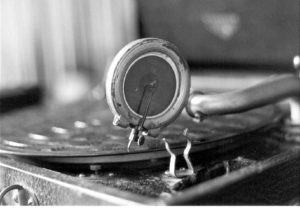
A part of the article that really caught my eye was the “The Sound Recording Industry gets its Wings”. I love find out how things became things per say, this time the portable phonograph. I found it interesting that it took such a dark time in American history, World War I, for such an innovative product to be made, being engineered for soldiers to have music on the forefront. Later being marketed to everyone, especially during the spring. Going from something so dark, war to something so happy, spring picnics, amazes me.
After reading the article I wanted to do more research on the portable phonograph; I came across an article on gibson.com. Explaining how even with the introduction of LPs and 45s, turntables (they’re called now) did not do so poorly in the market. That I found astonishing because as human beings we are always wanting the new and better.
http://www.gibson.com/news-lifestyle/features/en-us/turn!-turn!-turn!-a-history-of-turntables.aspx